

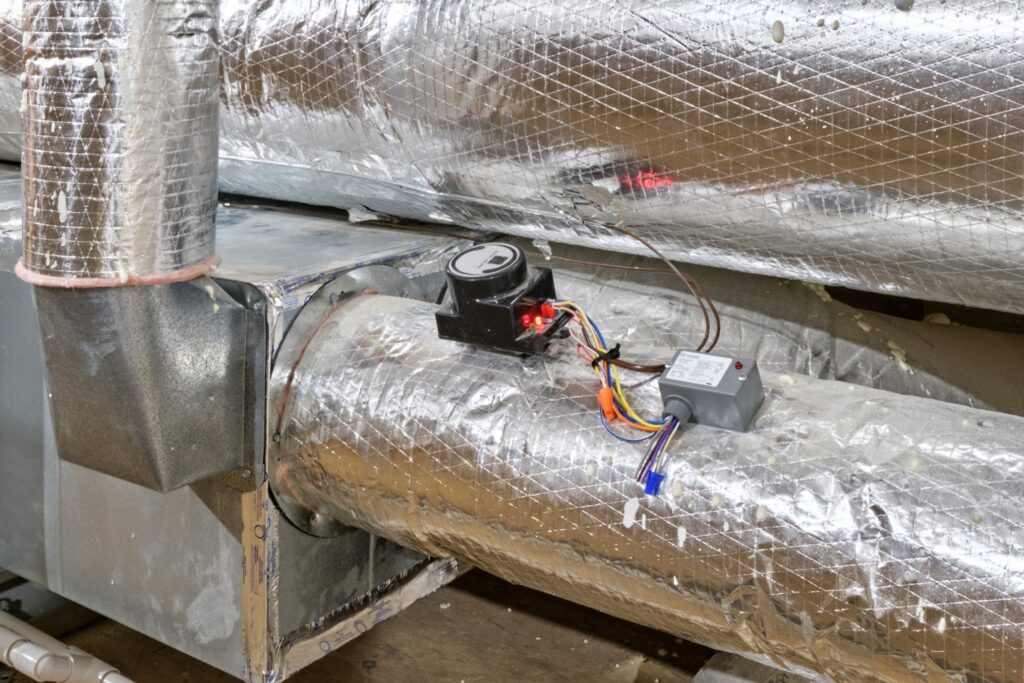
Damper Actuator Replacement – Restore Precise Zoning Control
Key Takeaways About Damper Actuator Replacement
Damper actuator replacement means swapping and recalibrating the motor that moves zone dampers to restore balanced airflow. This summary is for homeowners and property managers who notice drafts or uneven room temperatures and need guidance on next steps.
- Identify noisy or slow dampers during a zone call
- Prevent repeat failures by matching torque and control type
- Avoid wiring mistakes by powering down and tagging circuits
- Spot drafts and register velocity differences with simple checks
- Reduce imbalance by setting travel limits and verifying positions
- Plan periodic inspections and cleaning to extend actuator life
Introduction
Zoning systems rely on dampers and actuators to direct airflow so rooms reach the temperature you expect. When a zone actuator fails, one room may overheat while another stays chilly and drafty. That imbalance makes daily comfort unpredictable and forces the system to run longer than necessary. Homeowners notice timing differences, odd sounds, or abrupt temperature swings when actuators stop responding.
Professionals diagnose failed zone actuators by checking visible symptoms and running targeted electrical and mechanical checks. They look for stuck dampers, actuator noise, and wiring issues near the thermostat and control panel. A tech will also inspect the supply plenum and return grilles for uneven airflow and register velocity. These steps pinpoint whether the actuator, damper, or control signal is at fault.
Selecting a replacement requires matching the actuator to the damper linkage, control signal type, and torque requirements. Modern actuators vary by voltage, travel angle, and speed so a proper match prevents future binding and uneven room comfort. Choosing the wrong actuator can lead to repeated failures and persistent drafts across rooms. In Bedford homes, small differences in actuator fit often cause recurring complaints about one or two rooms.
After replacement, recalibrating dampers restores balance and removes drafts by setting travel limits and verifying positions under load. Technicians confirm damper position with the thermostat and measure supply flow at registers to ensure even distribution. They document readings and adjust until rooms hold setpoints reliably through typical daily cycles. For properties in Fort Worth, TX, restoring precise zoning control means fewer complaints and calmer, more consistent indoor comfort.

How Damper Actuators Work And Why It Happens
Damper actuators are electric or spring-driven devices that move HVAC dampers to control airflow for each zone. They translate a control signal from the thermostat or zone controller into a specific damper position. The actuator’s torque, travel angle, and control type determine how the damper responds to demand. Homeowners often ask whether a noisy or slow damper means the actuator is bad, and the short answer is yes, that symptom commonly points to actuator issues.
- Electric actuators use 24V or 120V control signals.
- Spring-return actuators move on loss of power.
- Modulating actuators adjust position continuously.
- End-switches tell the control when a damper is closed.
Most actuators mount to the damper shaft or linkage and attach with a coupling or clamp. The linkage translates actuator rotation into blade movement, and any play or misalignment causes poor sealing. A professional checks mechanical coupling and shaft alignment before deciding on replacement. This prevents new actuators from binding and keeps rooms from feeling drafty.
Electrical compatibility matters as much as mechanical fit when selecting a replacement actuator. Technicians match control voltage, signal type, and travel angle to the existing zone controller. They also consider torque ratings to overcome static pressure and register dampers under load. For Bedford homeowners, ensuring these matches avoids repeated returns and ongoing comfort complaints.
Actuators can be single‑position, two‑position, or modulating, and each type affects airflow response differently. The control algorithm in the zone panel expects a certain response, so a mismatch alters cycling and temperature stability. When techs replace actuators they also set travel limits and confirm positions with the thermostat readout. You can learn more about professional balancing and control checks in our zoning control tuneup resources for Fort Worth, TX properties.
Common Causes Of Damper Actuator Failure
Mechanical wear often causes actuators to fail first. Bearings or internal gears wear from continuous cycling, which makes movement slow or jerky. Loose couplings between the actuator and damper shaft let the actuator spin without moving blades. Technicians inspect these parts visually and by manually trying the linkage to confirm where the play occurs.
Electrical faults also cause many failures and can mimic mechanical problems. Burned contacts, shorted windings, or a bad end switch stop an actuator from reaching full travel. A pro will take voltage readings at the actuator and continuity checks across the control terminals during testing. Those readings help determine whether to repair wiring or replace the actuator unit.
Environmental factors shorten actuator life in some installations. Excess dust, insulation debris, or moisture inside the plenum gummed up gears and corroded connectors. High static pressure from undersized ducts increases torque demands and can overstrain an undersized actuator. For complex panels and control logic issues, technicians often run a full zone panel diagnostic while noting actuator response and signal timing to isolate the real cause.
Improper installation and mismatched specs are frequent culprits for repeat failures. Using an actuator with insufficient torque or the wrong travel angle makes the damper bind under load. Control type mismatches, like putting a two-position unit where a modulating signal is expected, confuse zone controllers. Homeowners should expect a tech to verify mechanical fit and electrical compatibility before recommending a damper actuator replacement.
Warning Signs Homeowners Should Watch For
Unusual sounds near vents often signal actuator issues before temperature problems appear. A high-pitched whine or grinding that starts when zones change indicates internal gear wear. If the noise occurs only when specific rooms call for heat or cooling, homeowners should note which damper moves. Technicians use that timing to isolate the noisy actuator during a live test.
Feel for drafts or cold spots where doors meet floor and walls to spot sealing failures. A persistent draft at a closed register suggests the damper blade is not seating fully. Homeowners can compare register direction and airflow between rooms to detect imbalance. Professionals then confirm by measuring register velocity and observing damper position through the panel.
Irregular cycling of the HVAC system and sudden temperature swings often trace back to control or actuator faults. If the system runs longer but one zone never reaches setpoint, the actuator may be stuck open or closed. Another sign is a thermostat that shows demand but the damper does not respond visually or audibly. A tech will check control signals and actuator movement at the damper shaft to confirm the problem.
Visible damage or corrosion inside the plenum around a damper warns of future failures and reduced sealing effectiveness. Insulation fragments, rust, or accumulated debris on the linkage cause binding and inaccurate travel. For homeowners in Bedford, spotting this early prevents comfort complaints from spreading to adjacent rooms. See our article on zoning dampers for examples of how proper damper condition affects room balance.
How Pros Diagnose Faulty Damper Actuators
Technicians begin with observable behavior and work toward specific tests that confirm a faulty actuator. They watch a damper while a zone calls for heating or cooling and note response time and travel consistency. A pro will also cycle zones from the control panel to see if the actuator responds to the controller command. If movement is slow or partial, they proceed to electrical and mechanical checks to isolate the fault.
- Check voltage at actuator terminals
- Test continuity across control wires
- Manually move the damper shaft
- Listen for grinding or clicking inside the actuator
- Verify control panel outputs during a call
Electrical checks include measuring control voltage and verifying signal type from the zone controller to the actuator. A technician uses a multimeter to confirm 24V or 120V presence and checks for a modulating signal if applicable. They also inspect wiring for loose terminals, burned insulation, or corroded connectors that could interrupt the control signal. These steps determine whether the issue is wiring, control output, or the actuator itself.
Mechanical inspection focuses on coupling, shaft alignment, and damper blade travel under load. The pro removes covers to look for stripped gears, seized bearings, or debris that blocks movement. They manually rotate the damper shaft to confirm free motion and measure resistance that indicates excess torque requirement. If the linkage shows play, the actuator may spin without moving the damper, which confirms a mechanical disconnect.
After confirming actuator failure, a final functional check documents position feedback and register airflow before recommending replacement. Technicians note end-switch operation, travel angle, and any position feedback to match the new unit. They record register velocity and damper positions during a typical call to show the impact on room balance. For further airflow adjustments and fine tuning, pros reference our guide on airflow damper tuning when planning recalibration in Fort Worth, TX and nearby Bedford properties.
Damper Actuator Replacement Options And Selection Criteria
When choosing a replacement for damper actuator replacement, professionals first list required specs from their diagnosis and controller. They confirm control voltage, travel angle, torque rating, and whether the zone panel needs a modulating or two-position response. Technicians also verify end-switch availability and any position feedback needed for the control logic. These checks ensure the new actuator will speak the same electrical language as the zone controller.
Mechanical fit follows electrical matching and includes shaft diameter, coupling type, and mounting footprint checks to prevent binding. A technician inspects the damper linkage and may recommend repairing a damaged blade before mounting the new actuator to improve sealing. If a blade shows wear or bends, teams refer to damper blade repair options to restore smooth motion. Proper coupling prevents an actuator from spinning without moving the damper under load.
Service life and duty cycle influence the selection when zones cycle frequently in large homes or busy buildings, so pros choose actuators rated for the expected number of cycles. They look for sealed housings if the plenum contains dust or insulation fragments that previously caused damage. For environments with potential moisture exposure, technicians prefer units with corrosion-resistant connectors. These choices reduce repeat failures and extend the replacement interval.
Speed and modulation characteristics affect comfort and system cycling, so specialists balance fast travel against noise and pressure shock in ducts. Slower modulating actuators can produce smoother room transitions and fewer audible clunks at the damper. End-switch timing and feedback settings get recorded so recalibration aligns with the new actuator’s behavior. Homeowners in Bedford should expect technicians to test the selected actuator under normal load before finalizing installation in Fort Worth, TX.
Step By Step Replacement And Damper Recalibration
Technicians begin by powering down the zone panel and tagging control wires before removing the old actuator to prevent accidental motor or control damage. They verify shaft alignment and coupling fit by hand-turning the damper through its full travel to confirm no binding exists. After mounting the replacement, the installer reconnects control wires and briefly energizes the unit to confirm correct rotation and travel direction. If the actuator moves opposite the expected direction, the tech swaps the control polarity or adjusts the linkage to correct motion before full calibration.
Next, the pro sets travel limits or stops on the actuator to ensure the blade seals without overtravel that causes wear or noise. They command full open and full closed positions from the zone controller while observing the damper under load to confirm the actuator reaches endpoints reliably. Position feedback and end-switch operation get tested against the zone panel signals to ensure the controller records correct status. Recorded test readings include travel angle and any delay between command and blade movement for documentation.
With mechanical motion verified, airflow measurements follow using register velocity readings and static pressure checks to see how the replacement affects distribution. The technician adjusts blade position slightly while the system runs at typical fan speed to balance neighboring zones and remove drafts at problem registers. For deeper performance verification, pros may perform an airflow performance test and document register CFM to compare before and after numbers. Homeowners in Bedford notice the difference when drafts subside and temperatures stabilize faster during normal cycles.
Finally, the tech runs the system through several demand cycles to watch for reoccurring issues like binding or delayed travel that only appear under repeated operation. They secure wire connections, apply moisture-resistant terminal covers if needed, and leave a simple checklist of readings and observed positions for the homeowner. If the homeowner wants more detailed post-work airflow data, technicians can arrange a comprehensive airflow test consistent with local performance checks in Fort Worth, TX. If any safety concerns or complex wiring irregularities appear, the homeowner should ask the technician to stop and evaluate before returning the system to regular service.
When To Call A Professional For Damper Actuator Replacement
If actuator movement stalls during a multi-cycle test or a damper seizes only under load, it is time to call a professional for damper actuator replacement. A technician can safely isolate control circuits and verify whether the zone controller or wiring caused the fault. Professionals also have access to spare actuators and can bench-test replacement units before installation to reduce repeat callbacks. Homeowners should treat electrical arcing, burning smells, or visible wire damage as reasons to stop using the system and request service immediately.
- Visible smoke or burning odors require immediate professional inspection.
- Repeated zone failures during normal cycling need diagnostic attention.
- Dampers that do not reach full travel under load need replacement checks.
- Loose or corroded wiring at the actuator calls for a trained technician.
If dampers bind only when the system runs at full fan speed, a pro will evaluate static pressure and actuator torque requirements before replacing parts. They will also inspect shafts, couplings, and blade condition to ensure a new actuator will operate smoothly. When controls deliver a modulating signal but the actuator is two‑position, technicians address both the actuator and controller logic to prevent mismatched behavior. For properties in Fort Worth, TX, coordinating those checks with airflow balancing can prevent persistent comfort issues after replacement.
Complex zone panels with position feedback or interlocks increase the risk of miswiring during DIY attempts, so homeowners should avoid replacing actuators without professional oversight. A trained tech documents end-switch behavior and records register airflow after replacement to confirm successful recalibration. If the homeowner notices drafts despite a new actuator, call for a follow-up so the technician can perform targeted balancing and adjustment. Early professional involvement reduces the chance of repeated failures and restores predictable room comfort quickly.
Preventive Maintenance To Keep Zones Balanced
Schedule periodic actuator inspections to catch wear before it affects room balance and comfort. A technician can observe travel smoothness, listen for abnormal noises, and check coupling tightness during routine visits. These inspections often include a fast operational cycle so the pro can see end-switch behavior and position feedback under normal load. Homeowners who notice subtle timing changes should ask for an early check to prevent larger balancing work later.
Cleanliness around the damper shaft and plenum keeps actuators moving freely and reduces corrosion risk in damp environments. Technicians remove loose insulation fibers and dust buildup that cause gear binding and inspect electrical terminations for corrosion. They may add moisture-resistant terminal covers where humidity or condensation has been a problem in the past. Simple cleaning extends actuator life and keeps dampers sealing to prevent drafts at registers.
Include damper travel verification and a quick airflow check during seasonal tune-ups to confirm zones remain balanced through temperature swings. A pro measures supply register velocity and verifies damper positions during both heating and cooling cycles to spot drift. If small adjustments are needed, the tech tweaks travel limits and documents new settings for future comparisons. For homeowners wanting register-focused fixes, technicians can follow targeted procedures described in our air register draft tuning resources to reduce localized drafts.
Monitor control signals and thermostat interactions as part of ongoing maintenance to catch communication faults early. Technicians check zone panel outputs and ensure modulating signals or end-switch contacts remain reliable during testing. Periodic verification prevents a failed actuator from causing prolonged imbalance or unnecessary system runtime. Homeowners in Bedford can benefit from scheduled checks timed before extreme seasonal loads to keep systems functioning predictably in Fort Worth, TX.
Frequently Asked Questions
What causes a damper actuator to fail suddenly?
A damper actuator can fail suddenly from motor burnout after repeated stalls or from an internal gear stripping under load. Electrical faults like shorted windings, blown fuses, or loose control wiring also stop actuator movement immediately. Power surges or moisture intrusion into the actuator housing can cause abrupt electronic failure and unsafe operation. If you suspect sudden failure, avoid forcing dampers and call a professional for diagnosis and any damper actuator replacement.
How do pros diagnose damper actuator replacement needs?
Technicians start by observing symptoms like rooms that never reach set temperature or dampers that stay stuck open or closed. They inspect the damper linkage, actuator wiring, and thermostat signals while the system calls for heat or cool. Simple checks include a voltage or continuity test and a manual damper position check to confirm actuator failure. If wiring or access creates safety risks, they recommend a professional for Damper actuator replacement and repair.
What specs matter when choosing a replacement actuator?
Match the actuator torque and rotation angle to the damper blade size and linkage so the damper fully opens and closes. Check voltage and control signal type, 24V, 120V, or modulating 0–10V/2–10V—so it works with your thermostat or zone controller. Confirm mounting style, shaft size, and weather rating for the existing damper to avoid mechanical failures. If wiring or access risks exist, exercise caution and hire a professional to complete the damper actuator replacement safely.
How do technicians recalibrate dampers after replacement?
Technicians start by centering the new actuator and confirming full travel matches the damper blade range.
They then use the thermostat or control panel to call each zone and watch damper movement under load.
Technicians measure airflow or temperature change at registers to verify zones reach setpoints and adjust stroke limits as needed.
If electrical hazards exist or dampers are inaccessible, caution is required and you should hire a professional to complete calibration.
When should I call a pro for persistent drafts at registers?
If drafts persist after you adjust vents and change filters, call a pro when uneven temperatures or noisy dampers continue. A technician will inspect zone dampers, actuator linkage, and thermostat signals to confirm the cause. If an actuator fails or wiring shows shorts, leave repairs to a licensed technician because wiring and airflow balancing can pose safety risks. For concerns in Fort Worth, TX homes, a pro helps decide if damper actuator replacement and recalibration will restore balanced airflow.