

Dual Fuel Switchover Settings That Work
Key Takeaways About Dual Fuel Switchover
Dual Fuel Switchover is the thermostat logic that decides when a heat pump yields to backup furnace heat. This guide helps homeowners and property managers tune settings before shoulder seasons and cold snaps.
- Identify outdoor sensor placement errors that skew temperature readings.
- Prevent short cycling by setting appropriate delay and runtime limits.
- Avoid wiring faults by confirming 24V at AUX and O/B terminals.
- Spot unusual sounds or long ignition times during handoff tests.
- Reduce energy waste by tracking runtime patterns before adjusting thresholds.
- Plan seasonal inspections to verify sensors contactors and airflow.
Introduction
Dual Fuel Switchover often determines whether a home stays comfortable and efficient when temperatures swing. A smooth handoff between heat pump and gas furnace stops short cycling and keeps energy use steady. Many homeowners notice odd temperature swings, frequent cycling, or noisy startups when the switchover is set poorly. Those problems are more than annoyances because they can shorten equipment life and raise utility use.
Setting the switchover correctly matters most during shoulder seasons and extreme cold snaps. If your system switches too early the heat pump struggles in very cold air and runs inefficiently. If it switches too late the furnace may run unnecessary cycles and produce sudden temperature jumps. Observing how your system behaves during transitions reveals whether settings need attention.
Professional diagnosis looks at actual run times, temperature differentials, and thermostat control logic to confirm a switchover issue. Technicians check the thermostat, outdoor temperature sensor, contactor activity, and furnace ignition sequence. They may record temperature readings and runtime patterns to decide the correct switchover threshold and delay. That evidence-based approach reduces guesswork and avoids repeated service calls.
Homeowners in Hurst, Texas and Lewisville, Texas often report comfort complaints tied to poor switchover settings after seasonal changes. Sounds like frequent cycling, unusual system starts at night, or rooms that never reach set temperature point to a handoff problem. Recognizing those cues early helps prevent more serious wear on the heat pump or furnace. When you see these signs it is wise to consult a trained HVAC technician for a proper diagnosis.
How Dual Fuel Switchover Works In Systems
Dual Fuel Switchover is the control logic that decides when a heat pump yields to a backup furnace. The system uses sensor input and thermostat commands to pick the most efficient heat source. Homeowners often ask whether the switchover is automatic or user-controlled, most systems switch automatically based on outdoor temperature or auxiliary heat runtime. A clear sign a switchover is happening correctly is steady temperature change without short cycling or loud ignition sounds.
- The thermostat monitors outdoor temperature.
- The heat pump runs as long as it meets demand.
- The furnace starts when conditions or runtime criteria are met.
- A time delay prevents rapid back-and-forth switching.
- Control relays coordinate which system supplies heat.
At the control level, a thermostat reads the outdoor sensor or uses internal logic to compare supply capacity. When the heat pump can no longer meet the setpoint, the thermostat energizes the furnace via a dedicated AUX or O/B terminal. Some thermostats use lockout temperatures while others use staged auxiliary heat decisions based on compressor runtime. That difference explains why two homes with identical equipment can have different switchover behavior.
Technicians diagnose handoff issues by observing thermostat outputs and hardware responses during a transition sequence. They check the outdoor temperature sensor, voltage at thermostat terminals, contactor engagement, and furnace ignition sequence. A simple homeowner check is watching which terminal shows 24V during a switch and noting any unusual sounds or delays. For more background on system types and popularity, see the article about dual fuel HVAC systems.
Homeowners in Hurst, Texas and Lewisville, Texas should note that proper wiring and correct thermostat settings eliminate most handoff problems. If a system repeatedly short cycles, produces delayed ignitions, or leaves rooms cold after a switch, a professional should inspect the control wiring and sensors. A technician will record runtime and temperature readings to recommend specific switchover thresholds and delay settings. That approach keeps both the heat pump and furnace running as intended without unnecessary wear.
Common Causes Of Faulty Switchover Operations
A common cause of faulty Dual Fuel Switchover is incorrect outdoor sensor placement leading to misleading temperature readings. If the sensor sits in direct sun or near exhaust air, the thermostat may think outdoor air is warmer than it is. Technicians check sensor location and compare its reading with a hand-held thermometer during diagnosis. Moving or recalibrating the sensor often restores accurate decision-making for switchover logic.
Another frequent issue is wiring errors or loose connections at the thermostat, heat pump, or furnace control board. A loose AUX or O/B terminal can cause delayed or failed calls for backup heat. During inspection a professional will measure 24V at relevant terminals and trace continuity to confirm proper signals. Fixing wiring faults stops intermittent handoffs and prevents unexpected cycling between systems.
Incorrect runtime or lockout settings inside the thermostat also cause poor handoffs by forcing premature or delayed switchover. Homeowners may see the furnace run too often or the heat pump struggle when these parameters are wrong. A technician will review the thermostat’s runtime thresholds and lockout temperature choices and adjust them based on system capacity and outdoor conditions. For guidance on choosing a temperature threshold that fits the heat pump’s capabilities, consult resources about balance point settings like the article on heat pump balance point settings.
Equipment-related faults such as failing compressors, weak burners, or clogged air filters make one system unable to meet demand and confuse switchover logic. Observable signs include longer run times, unusual noises, or visible soot near the furnace heat exchanger. Professionals inspect the compressor, contactor, filter condition, and furnace ignition sequence to confirm which component causes the failed handoff. Replacing or repairing the faulty component restores stable switchover behavior and consistent comfort.
Incorrect airflow and duct problems can also trigger poor switchover by changing how quickly indoor temperature reaches the thermostat setpoint. Restricted return ducts or dirty evaporator coils reduce heat transfer and make the thermostat call for backup heat prematurely. During a diagnostic visit, a technician measures static pressure, inspects the evaporator coil, and checks supply and return grilles for blockages. Addressing airflow issues helps both the heat pump and furnace operate within expected capacity for smooth handoffs.
Temperature Settings That Trigger Switchover Decisions
Choosing the outdoor temperature threshold for Dual Fuel Switchover often starts with the heat pump’s balance point and manufacturer guidance. A common practical choice falls in the 30°F to 45°F range depending on system capacity and insulation, but technicians confirm by checking actual heat pump output. During diagnosis a professional will compare outdoor sensor readings with a handheld thermometer and record indoor-outdoor temperature differentials. That data helps set a threshold where the heat pump still meets load without forcing the furnace on prematurely.
Some thermostats let you set a runtime-based switchover instead of a strict temperature lockout to prevent unnecessary cycling. For example, if auxiliary heat runs continuously for a preset runtime the thermostat will call the furnace regardless of outdoor temperature. A technician will inspect the AUX and compressor run timers and adjust the runtime limit to prevent short cycling during brief cold snaps. Homeowners noticing frequent AUX activation should ask for a runtime review during an inspection like an aux heat inspection to verify proper behavior.
Delay settings also influence handoffs because they prevent rapid back-and-forth switching when temperatures hover around the threshold. Professionals typically set a minimum delay between switchover events and monitor contactor activity and furnace ignition sequences for stability. They will also check thermostat wiring at the AUX, O/B, and common terminals to ensure correct signals before changing delays. Proper delays reduce wear from repeated ignitions and keep indoor temperatures steady during transition periods.
Some systems use adaptive logic that blends outdoor temperature with compressor performance and indoor setpoint to decide switchover. During a diagnostic visit a technician measures compressor run time, supply plenum temperature rise, and thermostat output voltages to determine if adaptive logic is working. They may recommend a slightly higher lockout temperature for homes with poor insulation or colder basements to avoid underperformance. Homeowners in Hurst, Texas and Lewisville, Texas should report observed sounds, runtime patterns, and any rooms that lag during transitions to guide a precise switchover setting.

Thermostat Configuration Steps For Proper Handoffs
Start by putting the thermostat into installer or advanced settings to access Dual Fuel Switchover parameters and lockout options. Locate the outdoor temperature lockout, auxiliary runtime limits, and minimum delay between switchover events. Note the thermostat model screen prompts and take a photo of original settings before changing anything. If you feel uncertain about any setting, pause and contact a qualified technician for guidance.
- Find outdoor temperature lockout.
- Set auxiliary runtime limits.
- Adjust minimum delay settings.
- Confirm wiring at AUX and O/B terminals.
- Record original settings for reference.
Set the outdoor lockout temperature based on your heat pump’s practical performance rather than a single rule of thumb. Change the lockout in small steps, for example in 2°F increments, and observe system behavior over a full day. After each adjustment, watch for shorter cycles, fewer furnace ignitions, and steady room temperatures. If the thermostat offers adaptive or balance settings, enable them only after confirming baseline responses.
Adjust auxiliary runtime limits to prevent unnecessary furnace starts when the heat pump needs a brief boost. Set a runtime that allows short compressor support but trips the furnace when auxiliary runs continuously beyond minutes you choose. Verify the thermostat uses the correct AUX terminal for backup heat and the O/B terminal for changeover valves when applicable. During these changes, check for 24V output at the relevant terminals to confirm the thermostat is signaling correctly.
Use the minimum delay setting to stop rapid back-and-forth switching when outdoor temperature hovers near the lockout threshold. A typical delay prevents switching more than once within a set interval, which reduces furnace ignitions and contactor wear. After configuring delays, test by forcing a call for heat and watching contactor activity and furnace ignition sequences. Homeowners in Hurst, Texas should log the thermostat outputs and runtime patterns for a technician if persistent problems continue.
If your thermostat supports specific aux-heat lockout profiles, choose the profile that matches your system type and duct condition. Review the thermostat documentation and compare recommended profiles to observed compressor performance and supply plenum temperature rise. When unsure, have a professional verify settings and complete a brief inspection of components like the contactor, furnace ignition, and outdoor sensor. For additional guidance on exact lockout options, consult the thermostat’s setup page like the resource on aux heat lockout settings.
How To Test Dual Fuel Switchover At Home
Begin by creating a controlled test that forces each system to run separately so you can observe the handoff behavior directly. Set the thermostat to call heat and force the heat pump to operate alone by temporarily disabling auxiliary lockout or placing the furnace in standby. Watch for steady airflow at the supply plenum and listen for the outdoor unit contactor engaging, note any loud compressor sounds or delayed starts as observable cues.
Next, trigger the furnace to verify its response and the timing of the switchover logic. With the heat pump off, call for heat and confirm the thermostat supplies 24V to the furnace ignition and that the burner lights without long delays. A professional would record voltage at the AUX or O/B terminal and measure supply plenum temperature rise to confirm the furnace provides expected heat when called.
Perform a simulated threshold crossing by adjusting the outdoor sensor reading or using the thermostat’s test mode to change lockout temperature. Observe the thermostat output transitions and the minimum delay between switchover events to ensure it prevents rapid back-and-forth switching. If the system switches repeatedly, check for wiring faults and inspect the contactor and control board for chatter or loose connections.
Use simple diagnostic checks to collect evidence before calling a technician for more complex faults. Measure 24V at the thermostat during both heat pump and furnace calls and record compressor runtime and furnace ignition times with a notebook or phone timestamps. For properties in Hurst, Texas or Lewisville, Texas, save these observations for the technician to speed diagnosis and set an appropriate switchover threshold based on real-world behavior.
When To Call A Professional For Switchover Issues
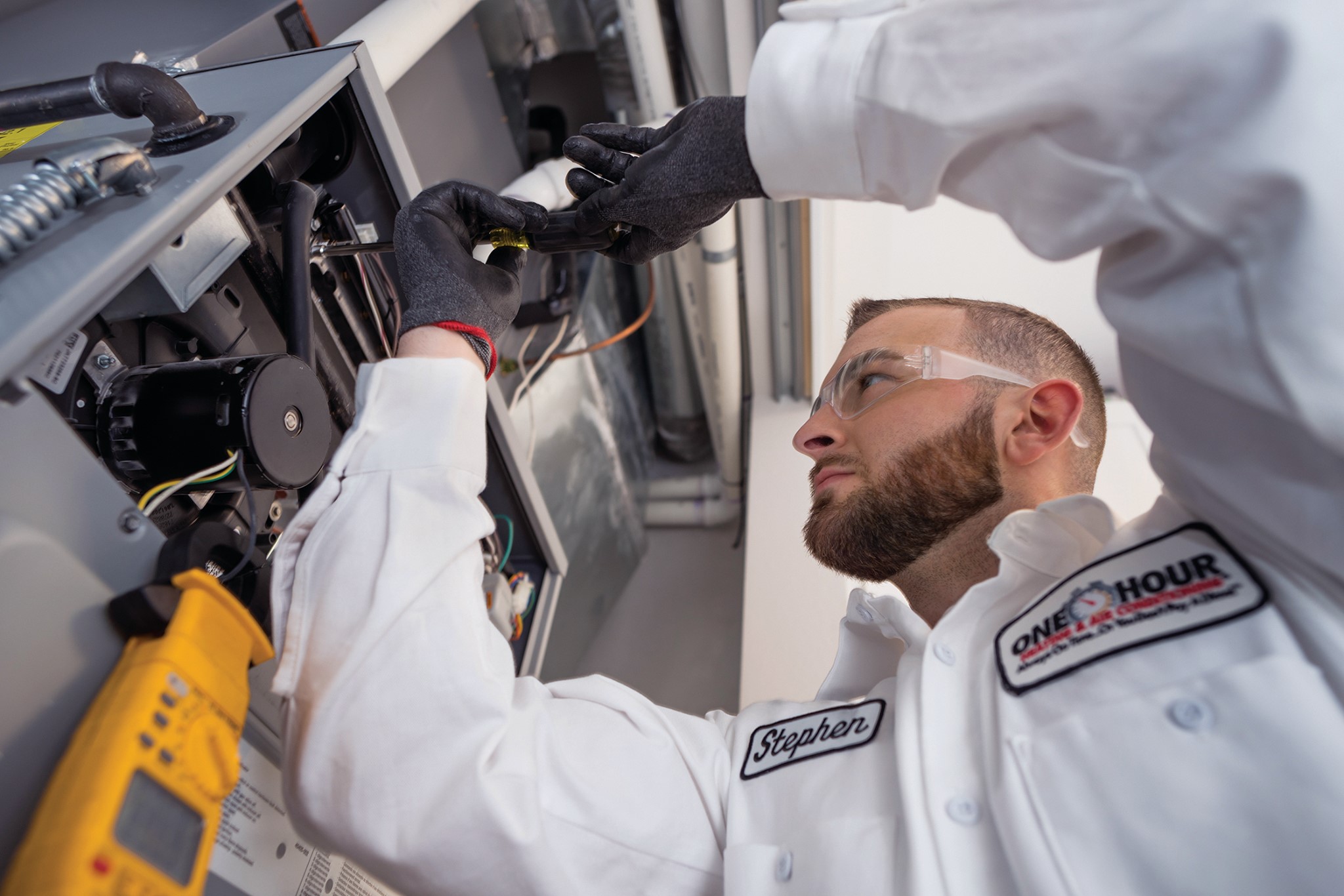
If the system fails to switch reliably after you run tests, call a technician to diagnose control logic and wiring. A professional will verify 24V signals at the thermostat terminals and trace continuity to the heat pump and furnace control boards. They will inspect the outdoor sensor placement and compare its reading to a handheld thermometer to rule out misleading inputs. Request documented readings so you can review the findings later with the technician.
Call for help when you hear repeated contactor chatter or frequent furnace ignitions during mild outdoor temperatures that should favor the heat pump. A technician will check relay operation, contactor seating, and control board voltages to find intermittent faults causing chatter. They will also observe the ignition sequence and flue behavior to confirm safe and timely furnace starts. Persistent mechanical noises paired with control anomalies are valid reasons to stop DIY troubleshooting.
If your thermostat shows erratic behavior or menu options related to Dual Fuel Switchover are inaccessible, ask a professional to inspect both the thermostat and system compatibility. The technician may verify wiring at the AUX and O/B terminals and test the thermostat outputs while monitoring system responses. They can also perform a full setup or migration to a compatible control, including proper sensor configuration and timing parameters. Consider having a pro assist with a smart thermostat setup to ensure correct switchover programming and stable operation.
Homes that experience uneven room temperatures after a switchover need a professional to assess airflow, duct balance, and component performance. A technician will measure supply plenum temperature rise, check for restricted returns, and record runtime patterns to determine whether airflow limits cause premature auxiliary heat calls. They will produce a written report with recommended adjustments to switchover thresholds and delay settings based on measured data. If you live in Hurst, Texas or Lewisville, Texas, save these test results for future seasonal checks.
Preventative Maintenance To Avoid Switchover Failures
Schedule seasonal inspections that include sensor calibration, contactor checks, and airflow verification to catch issues before a switchover failure occurs. Technicians will verify outdoor sensor accuracy against a handheld thermometer and adjust placement if readings differ. They also inspect thermostat wiring at AUX and O/B terminals for corrosion or looseness that causes intermittent signals. Regular filter and coil checks improve heat pump capacity and reduce unnecessary auxiliary calls.
- Check outdoor sensor placement.
- Inspect thermostat terminal connections.
- Measure supply plenum temperature rise.
- Clean or replace air filters.
- Verify contactor operation.
Maintain clear condensate and drain lines to prevent moisture-related control faults that can confuse switchover logic. A blocked condensate can trip safety switches or cause the heat pump to stop unexpectedly during a transition. Technicians also test the contactor for proper engagement and absence of chatter that signals electrical wear. Recording these findings helps set appropriate maintenance intervals based on system condition.
Review thermostat programming and deadband settings during tune-ups to ensure the Dual Fuel Switchover operates as intended. Adjusting the control deadband can stop rapid cycling and reduce unnecessary handoffs during temperature swings, refer to the guide on thermostat deadband settings for practical examples. A professional will confirm the thermostat reports accurate outdoor temperature and that adaptive features match the installed equipment. Documenting changes and test results creates a baseline for future troubleshooting.
Plan an annual inspection before the heating season to test the full switchover sequence under controlled conditions. Technicians perform runtime tests, measure 24V outputs at relevant terminals, and record compressor and furnace response times for comparison. In Hurst, Texas and Lewisville, Texas, seasonal checks help homeowners avoid surprise failures during sudden cold snaps. Keeping a maintenance log with recorded readings reduces diagnostic time if problems recur later.
Energy And Cost Considerations For Smooth Switchover
When adjusting Dual Fuel Switchover with cost and energy in mind, track runtime patterns before changing thresholds. Note how long the heat pump and furnace run during similar outdoor temperatures to identify inefficient overlaps. A technician can use runtime logs and voltage checks at the AUX and O/B terminals to build a clear picture for adjustment. These measured results guide whether a small change or different lockout strategy will reduce wasted energy.
Consider how delays and minimum run times affect total energy use during transitions and short temperature swings. Increasing the minimum heat pump run time can avoid repeated furnace starts caused by brief demand spikes. A professional will inspect supply plenum temperature rise and measure compressor runtime to confirm the heat pump delivers usable heat before extending delays. Those readings also reveal if airflow or coil issues are forcing auxiliary heat prematurely.
Balance decisions should factor in heat pump efficiency curves and furnace startup characteristics rather than relying solely on outdoor temperature thresholds. Technicians may compare measured supply temperature and compressor amperage against expected performance to choose a sensible lockout. Such comparisons prevent settings that favor one system at the expense of excess runtime on the other system. For precise sensor calibration before final adjustments, refer to guidance on thermostat calibration in Watauga.
Monitoring after any adjustment is essential to confirm energy behavior improved and comfort stayed steady for multiple days. Record indoor setpoint stability, frequency of furnace ignitions, and noticeable sounds during handoffs to provide feedback to a technician. If you live in Hurst, Texas or Lewisville, Texas, include location-specific observations like timing of morning heat calls or nighttime temperature lag in your notes. These empirical notes let a technician fine-tune switchover settings for efficient, reliable operation.
Frequently Asked Questions
How do I set the Dual Fuel Switchover temperature?
Set the Dual Fuel Switchover temperature where the heat pump still runs efficiently but backup heat isn’t overused. Start around 30°F to 40°F as a common baseline, then adjust based on comfort and utility charges. Observe system behavior for several days and note frequent short cycles, loud burner starts, or rising indoor complaints. Exercise caution near electrical or gas components and contact a licensed HVAC technician if you suspect wiring, thermostat, or control board issues.
What symptoms show my switchover is wrong?
You may hear the heat pump and furnace cycling on and off rapidly when the Dual Fuel Switchover setting is wrong.
Rooms can feel unevenly warm or cold and the thermostat may display frequent mode changes.
You might notice higher-than-normal run times or unexpected fuel-source starts during mild outdoor temperatures.
If you smell gas, see soot, or suspect a safety issue, stop the system and call a professional immediately.
Should I use runtime lockout or temperature lockout?
Choose temperature lockout when outdoor temperature clearly determines efficiency between heat pump and furnace for predictable handoffs. Use runtime lockout if short cycling or frequent manual overrides cause energy waste and comfort swings. Many systems use a hybrid: temperature primary with a short runtime lockout to prevent rapid switching, consult a professional to set safe limits. If wiring or controls confuse you, exercise caution and contact a licensed HVAC technician to inspect and program the Dual Fuel Switchover.
How do I test switchover without changing wiring?
Set your thermostat to the temperature that would normally trigger the heat source to change and observe system behavior without opening the control panel. Watch for clear signs: outdoor heat pump compressor cycling off, indoor furnace ignition, and thermostat display indicating the active stage. Use a thermometer at a supply register and a basic voltage or continuity check at the thermostat terminals to confirm which system is commanding heat, avoid probing live terminals if unsure. If you detect unexpected wiring behavior or feel uncertain, stop and call a qualified HVAC technician to prevent electrical or combustion hazards.
When should a pro diagnose switchover issues?
Call a pro when you notice frequent short cycling or noisy handoffs between systems during temperature changeovers. If the heat pump fails to engage or the furnace kicks on unexpectedly, have a technician inspect controls and wiring. A professional should also diagnose after thermostat replacement, control board work, or repeated system lockouts to confirm correct Dual Fuel Switchover settings. If you detect burning smells, gas odors, or electrical arcing, stop the system and contact a trained technician immediately for a safe inspection.